
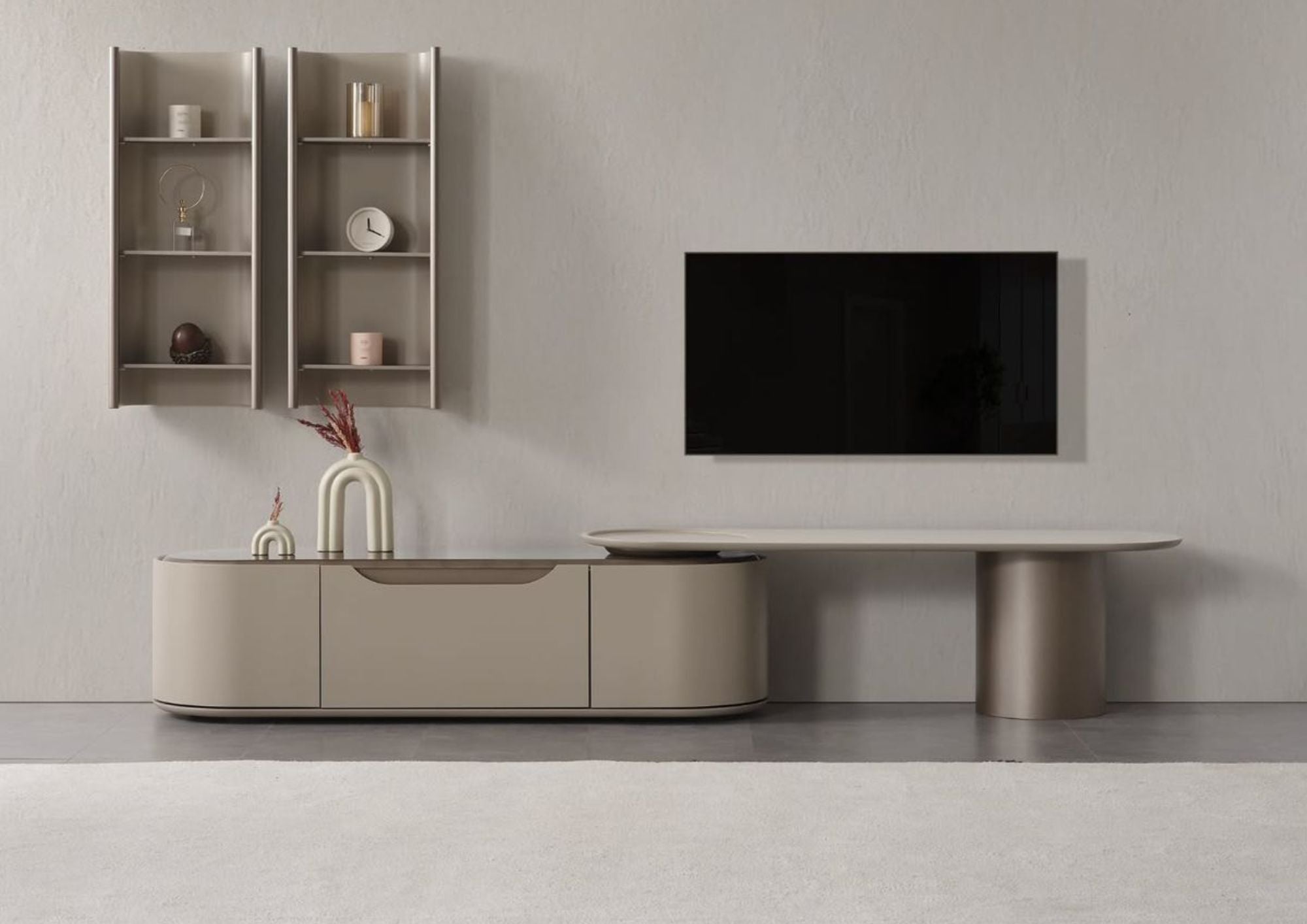
A TV unit is rarely the first piece people think about while planning a living room. The focus usually goes to the sofa, sometimes the coffee table, and then the rest of the space starts to take shape around them. The TV unit enters the picture later — often as a functional addition.
But over time, it becomes clear that this piece does more than just hold a screen. It defines how you sit, how you look at the room, and how comfortable the space feels in daily use. When it’s sized and placed well, everything aligns naturally. When it isn’t, even a well-designed room can feel slightly off without an obvious reason.

Starting with Viewing Distance
The relationship between your seating and the TV is where most of the comfort comes from. If the screen is too close, it feels overwhelming. If it’s too far, it disconnects from the space. The goal is to create a viewing experience that feels effortless — something you don’t have to adjust to every time you sit down.
A practical way to approach this is to use your screen size as a reference point:
- 43–50-inch TV → approximately 6–8 feet distance
- 55–65-inch TV → approximately 8–10 feet distance
- Larger screens → proportionally more space
These are not strict rules, but they work well as a starting framework. What matters more is how it feels when you sit down. The viewing angle should feel natural, especially when paired with a modern luxury sofa set that already prioritises comfort.

Finding the Right Height Without Overcomplicating It
Height is one of those details that often gets adjusted after installation, which usually means it wasn’t planned carefully enough in the first place. The most comfortable viewing position is when the center of the TV aligns with your eye level while seated. This reduces strain and allows you to watch for longer periods without discomfort.
In most homes, this translates roughly to:
- Seat height → around 16–18 inches
- TV center → around 40–45 inches from the floor
Instead of focusing too much on exact measurements, it helps to test your seating position first. Sit on your sofa, understand your natural eye level, and then align the TV accordingly. The TV unit should support this positioning — not force you into adjusting your posture.

Choosing the Right Size for the TV Unit
A TV unit that is too small can feel disconnected from the wall, almost like it’s floating without purpose. On the other hand, an oversized unit can make the space feel heavy and visually crowded. Balance comes from proportion.
A simple guideline that works well:
- The unit should be wider than the TV
- It should visually anchor the wall without extending unnecessarily
In compact Indian homes, this becomes even more important. The unit needs to fit comfortably within the available wall space while still maintaining presence.

Storage That Feels Thoughtful, Not Excessive
TV units often double up as storage, and this is where decisions can easily go either way. Too much storage can make the unit bulky and dominant. Too little can reduce functionality.
A balanced approach usually works best:
- Closed storage for a cleaner look
- Limited open sections for easy access
- Enough space to organise essentials without overcrowding
Before deciding on storage, it helps to think about actual usage. Not everything needs to be stored here. Keeping it minimal often makes the unit feel more refined.

Placement in Relation to the Living Room Layout
A TV unit doesn’t function independently. It works in constant relation to the seating arrangement.
The distance between the unit and seating should allow:
- Comfortable viewing
- Easy movement across the room
- Clear visual alignment with the rest of the layout
If your living room also includes flexible seating like puffies or additional chairs, the placement should still allow the space to remain open and adaptable. This balance is what makes the room feel easy to use, not just visually appealing.

Material and Finish: Subtle but Important
Since the TV unit often becomes a focal wall, its material influences how the entire space is perceived.
Some commonly used options include:
- Wood → warm, versatile, works across most styles
- Matte finishes → understated and contemporary
- Stone or high-gloss surfaces → more premium and prominent
The key is not to overemphasise the unit. It should complement the rest of your premium furniture, not compete with it. Consistency in finish and tone usually creates a more cohesive space.

Keeping the Wall Balanced
Apart from the unit itself, the surrounding wall also plays a role in how the space feels.
A few considerations that help:
- Avoid overcrowding the wall with too many elements
- Maintain some open space around the unit
- Keep proportions aligned with the size of the room
A well-balanced wall feels complete without needing constant additions.

A Practical Way to Approach It
Instead of starting with design, it helps to begin with usage.
Ask yourself:
- How often will the TV be used?
- How many people will typically be watching?
- What kind of seating arrangement is already in place?
These answers guide decisions around size, distance, and placement more effectively than visual references alone.
A TV unit works best when it supports the room quietly. It aligns the seating, balances the wall, and creates a comfortable viewing experience without drawing too much attention to itself. When size, height, and placement are thoughtfully considered, the result feels natural — something you don’t think about, but appreciate every day. And in most homes, that’s exactly what good furniture is meant to do.

FAQs:
1. What is the ideal distance between a TV and sofa?
It depends on screen size, but generally ranges between 6 to 10 feet for most home setups.
2. At what height should a TV be placed?
The centre of the TV should align with eye level when seated for the most comfortable viewing experience.
3. How wide should a TV unit be compared to the TV?
The unit should be wider than the TV to create visual balance and properly anchor the wall.
4. Should a TV unit include storage?
Yes, but it should be balanced. A mix of closed and minimal open storage works best.
5. Can a TV unit affect room aesthetics?
Yes, it plays a major role in balancing the wall and connecting the seating layout.
6. What material is best for TV units?
Wood, matte finishes, and stone are commonly used depending on the style of the space.
Share:
Designing Relaxation Corners at Home: Chairs, Tables & Layout Ideas