

Indian homes often bring several strong materials into one view: wood flooring or doors, a marble surface, metal details, upholstered seating and inherited pieces with their own finish. When every item is matched, the room can feel flat. When every material competes, it can feel unsettled. The answer lies in hierarchy, repetition and undertones rather than exact matching.
Learning how to mix wood tones also makes it easier to introduce marble and metal furniture with confidence. One material should lead, the others should support it, and each should appear with enough intention to belong. This method works in compact apartments as well as larger living and dining rooms.

Choose the dominant material already in the room
Begin with the largest fixed surface: flooring, doors, wall panelling or a substantial built-in. Its colour and visual weight establish the background for the furniture. If warm medium-toned wood already covers the floor, the room does not need every table and chair to repeat it exactly. It needs furniture that acknowledges that warmth while adding controlled contrast.
In a room without a strong fixed finish, let the largest furniture piece lead. A dining table, bed or sofa can become the dominant material reference. The remaining pieces should support rather than imitate it. This creates a clear order for the eye and prevents a collection of individually attractive items from competing at the same volume.

Read the undertone before the shade
Light and dark describe value, but undertone describes the colour beneath it. Woods may read warm with red, honey or yellow notes; cool with grey or ashy notes; or relatively neutral. Two woods of different darkness can work well when their undertones relate. Two similar medium browns can clash if one appears orange and the other distinctly grey.
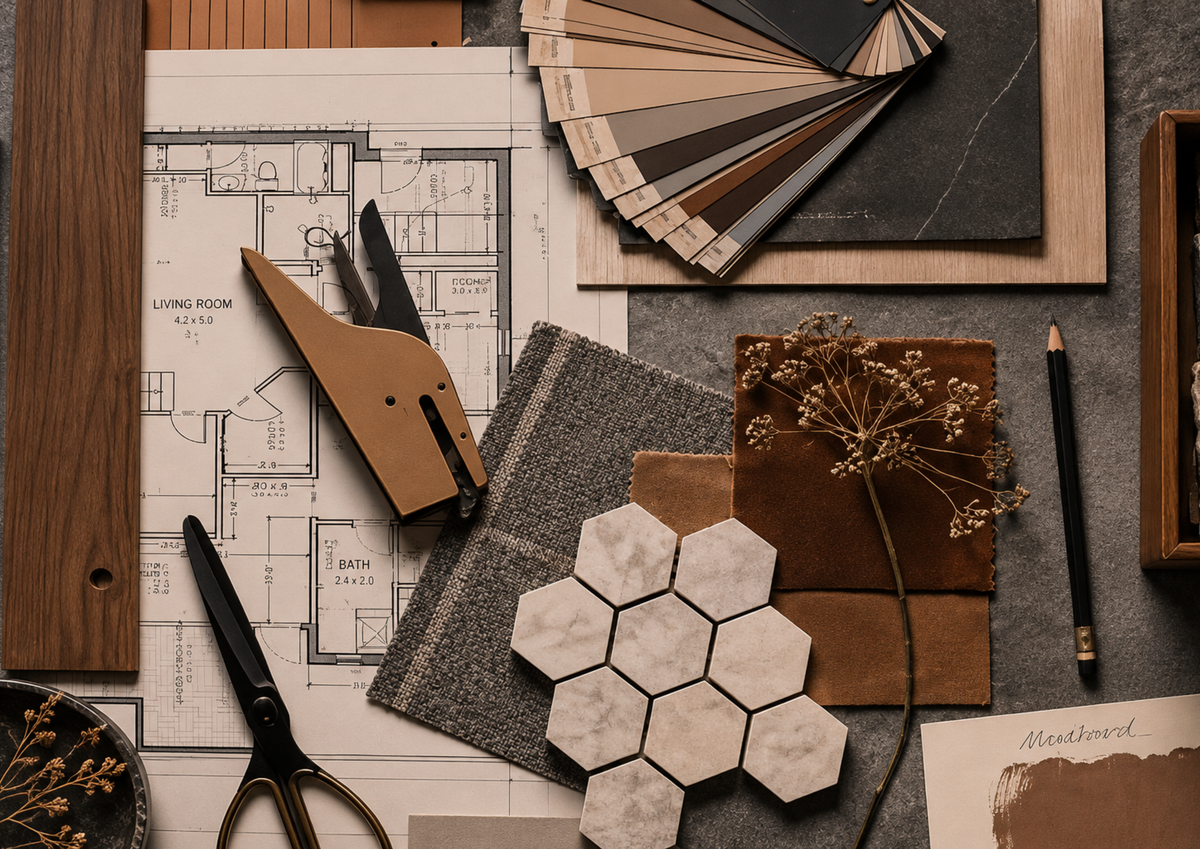
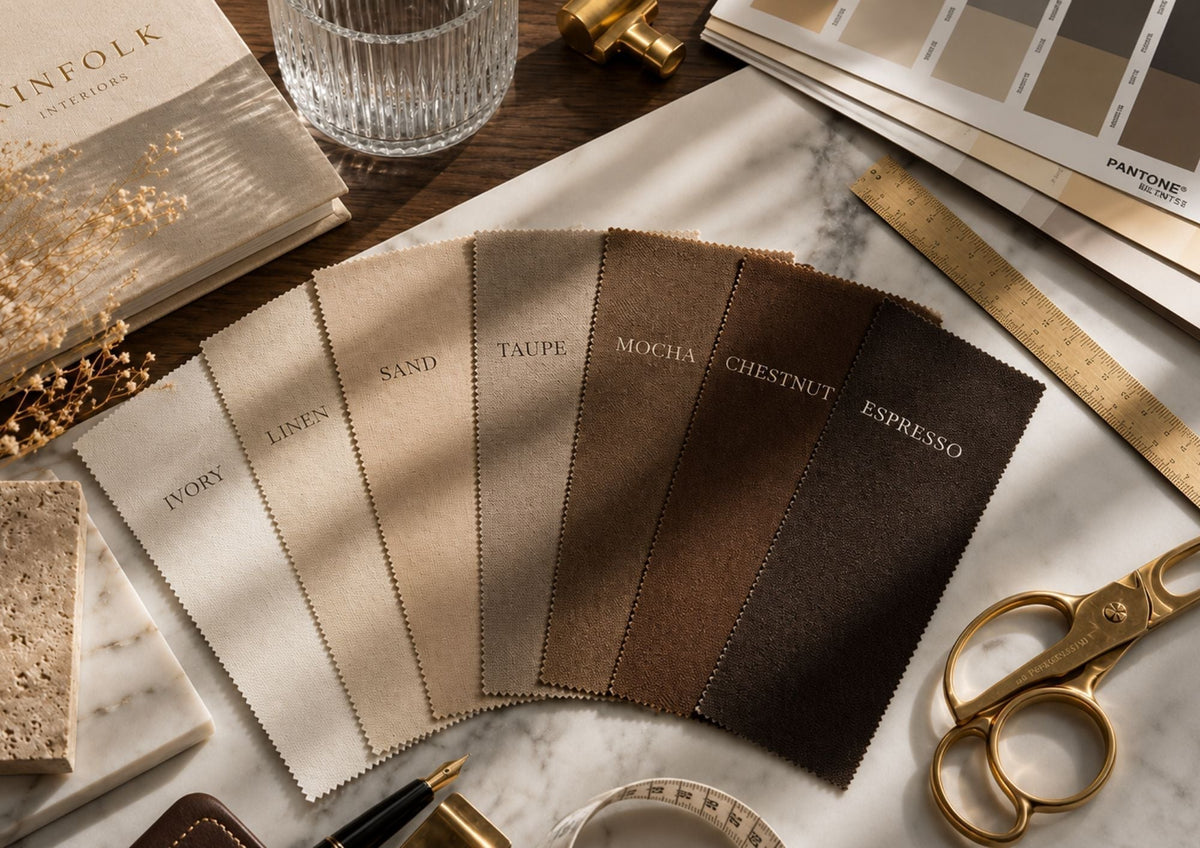
View samples in the room during daylight and after the evening lights are on. Indian interiors often use warm artificial lighting, which can intensify yellow and red notes. Place wood, stone, metal and upholstery samples together rather than approving them separately. A phone photograph can help reveal which finish pulls away from the group, although final decisions should be made from physical samples.

Use contrast deliberately
Contrast makes mixed materials legible. A dark wood centre table can sit comfortably on a pale floor when the difference is clear. A medium wood only slightly different from the floor may look like an unsuccessful match. The same principle applies to stone: strongly veined marble can act as a focal surface, while quieter stone allows the wood grain or upholstery to lead.
Separate similar colours with another material when needed. A rug can create breathing room between a wood floor and wood furniture. Upholstered dining chairs can interrupt a dense combination of timber table and timber flooring. Explore the dining table sets and centre tables as references for how wood, stone, metal and upholstered elements can divide visual weight.

Repeat each important finish
A material that appears once can feel accidental. Repeat its colour or character in at least one other place, but vary the scale. The wood tone of a dining table might return in chair legs or a console. A metal base can connect with a lamp, handle or slim frame. The marble of a centre table can be echoed by a smaller tray rather than another large slab.
Repetition should guide the eye, not create a matching set. Keep the strongest material on the largest piece and use smaller echoes elsewhere. In an open living-dining plan, repeating one wood tone and one metal finish across both zones is often enough to establish continuity while allowing each area to retain its own focal piece.

Treat marble as pattern as well as material
Marble contributes colour, movement and contrast through its veining. Before pairing it with wood, identify the stone’s base colour and the warm or cool direction of the veins. Cream and beige stones usually sit naturally with honeyed woods and warm metals. Crisp white or grey-veined stones often suit cooler woods and restrained silver-toned metals, though upholstery can bridge a more contrasting scheme.
Consider how much marble the room needs. A large dining top with pronounced veining already makes a clear statement; additional marble side tables may dilute it. If the stone is quiet, a smaller second appearance can feel balanced. Also account for care: natural marble can etch or mark, so its placement should suit the way the household eats, entertains and cleans.

Use metal as punctuation
Metal is most effective when it defines edges, supports a top or introduces a measured highlight. Black metal can sharpen pale wood and neutral stone. Brass, gold-toned or PVD-finished details can warm a scheme, while stainless or silver-toned finishes tend to feel cooler. The finish should relate to the room’s undertone and the level of contrast you want.
Avoid giving every item a decorative metal edge. Choose one leading metal finish and repeat it selectively. Existing door hardware, lighting and fan finishes belong in the comparison, especially in compact rooms where everything is visible together. A second metal can appear, but it should be clearly secondary and preferably share a similar sheen.

Let upholstery bridge hard materials
Fabric and leather soften the transition between wood, stone and metal. A warm neutral sofa can connect honeyed timber with cream marble, while a grey-beige textile can bridge cooler wood and steel. Texture also matters: bouclé adds softness beside polished stone, linen introduces a relaxed surface, and velvet can deepen colour next to sleek metal.
Choose the upholstery after the principal hard finishes are assembled. Large fabric swatches are more useful than small cuttings because colour can shift across a full sofa. Oria Homes’ sofa collection and armchairs can help you compare upholstered volume against the harder materials planned for tables and consoles.

Coordinate rooms without copying them
An Indian home often connects the entrance, living room and dining area within one sightline. Carry one or two finishes through that view, then change the emphasis by room. The living area may lead with upholstery and wood, while the dining area leads with marble and uses the same wood only in the chairs or console.
Bedrooms can be quieter. A modern luxury bed may establish the main fabric or wood tone, with metal restricted to lamps or slender bedside details. Review the modern luxury beds collection after identifying the existing wardrobe, door and floor finishes; those fixed elements should inform the bed rather than be ignored.

Know when custom furniture is useful
Custom furniture helps when the room needs a precise bridge between finishes. A console might use the same wood family as a dining table but introduce the metal found in the lighting. A centre table can repeat the marble from the dining zone at a smaller scale. Customisation can also control sheen, edge profile and proportion so multiple premium furniture materials feel related.
Bring physical samples and photographs to the design discussion, including fixed materials that cannot change. Through Oria Homes’ custom furniture service, the palette can be considered across wood, stone, metal and upholstery before production begins. This reduces the risk of approving each attractive finish in isolation.

Conclusion
A successful mixed-material room has a dominant material, compatible undertones, deliberate contrast and repeated details. Wood provides warmth and structure, marble adds pattern and visual weight, metal defines or highlights, and upholstery connects the harder surfaces. The combination should be clear enough to feel intentional and restrained enough to let the room breathe.
If you are coordinating existing floors and joinery with new luxury furniture, contact Oria Homes. A material-led consultation can turn separate samples into one practical palette for the home.

Frequently asked questions
Do all wood tones in a room need to match?
No. Choose a dominant wood, compare undertones and use clear light-to-dark contrast. Repeating each important tone in a smaller detail helps the mix feel intentional without creating a matching set.
How many wood tones can I use in one room?
Two or three are usually manageable when one leads and the others support it. The room size, amount of visible flooring and presence of stone or metal matter more than a fixed number.
Can warm wood be paired with grey marble?
Yes, if another element bridges the temperature difference. A warm grey fabric, a marble with beige movement or a restrained metal finish can connect the two. Always compare physical samples in the room’s lighting.
Which metal finish works with marble and wood?
Warm brass or gold-toned finishes often complement honeyed woods and cream stone, while black or silver-toned metals can sharpen cooler schemes. Use the room’s undertones, existing hardware and desired contrast to decide.
How do I mix materials in an open living and dining room?
Repeat one wood tone and one metal finish across both zones, then change which material dominates. For example, upholstery and wood may lead in the living area while marble leads in the dining area.
Can custom furniture help match existing finishes?
Yes. Customisation can coordinate wood stain, stone selection, metal finish, sheen and upholstery with fixed floors, doors and joinery. Provide physical samples or accurate references before approving the design.
Share:
Warm Minimalism in Indian Homes: How to Create a Luxurious Look Without Clutter
Will It Fit? A Furniture Delivery Measurement Guide for Doors, Lifts and Staircases